
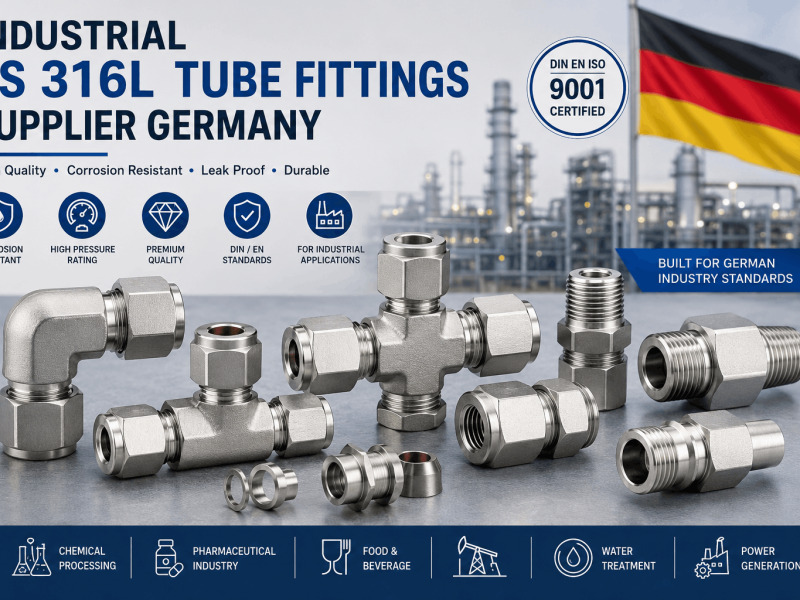
Introduction
Germany is one of the leading industrial economies in Europe, with strong demand for high-performance piping and fluid control systems across sectors such as chemical processing, pharmaceuticals, food manufacturing, automotive engineering, power generation, and oil & gas. In these demanding industries, the use of corrosion-resistant and durable components is essential for operational safety and long-term efficiency. This is why industrial buyers prefer working with an Industrial SS 316L Tube Fittings Supplier Germany for reliable and precision-engineered stainless steel solutions.
SS 316L tube fittings are widely used in industrial piping systems because of their excellent corrosion resistance, leak-proof sealing capability, low carbon composition, and superior mechanical strength. These fittings are designed to perform efficiently under high pressure, elevated temperatures, and chemically aggressive environments. Germany’s industrial sector also emphasizes strict compliance with DIN, EN, and ASTM standards, making SS 316L an ideal material for critical industrial applications.
This guide explains the features, types, applications, advantages, standards, and industrial importance of stainless steel 316L tube fittings in Germany.
What Are Industrial SS 316L Tube Fittings?
Industrial SS 316L tube fittings are precision-engineered stainless steel components used to connect, control, and direct fluid or gas flow within industrial tubing systems. These fittings are manufactured using low-carbon stainless steel grade 316L, which offers enhanced corrosion resistance and excellent weldability.
Tube fittings are commonly installed in instrumentation systems, hydraulic lines, chemical transfer systems, gas distribution networks, and high-pressure industrial piping applications. They help create leak-proof connections while ensuring operational reliability and safety in critical industrial environments.
SS 316L contains chromium, nickel, and molybdenum, which significantly improve its resistance to pitting corrosion, chloride exposure, and harsh chemicals. The low carbon content in 316L also minimizes carbide precipitation during welding, making it highly suitable for welded industrial systems.
Unlike standard pipe fittings, tube fittings are manufactured with higher dimensional precision to support instrumentation and fluid handling systems that require exact tolerances and secure sealing performance.
Key properties of SS 316L tube fittings include:
- Excellent corrosion resistance
- High tensile strength
- Leak-proof performance
- Superior temperature resistance
- Long operational life
- Hygienic surface finish
- Excellent weldability
These properties make SS 316L tube fittings highly suitable for Germany’s advanced industrial infrastructure.
Why Germany Uses SS 316L Tube Fittings in Industrial Applications
Germany has a strong reputation for precision engineering, industrial automation, and high manufacturing standards. Industries operating in Germany require piping components that can maintain long-term performance under demanding operational conditions.
SS 316L tube fittings are widely used because they provide durability, reliability, and compliance with international industrial standards. German industries prioritize components that minimize downtime, reduce maintenance costs, and support efficient production systems.
The pharmaceutical industry in Germany requires hygienic stainless steel fittings for contamination-free processing systems. SS 316L is preferred because of its smooth surface finish and corrosion resistance, which support sanitary operations.
In chemical processing plants, tube fittings are continuously exposed to corrosive chemicals, acids, and aggressive fluids. SS 316L provides superior resistance against pitting and chemical corrosion, making it suitable for harsh processing environments.
Germany’s food and beverage industry also relies heavily on stainless steel piping systems for hygienic fluid handling. SS 316L fittings ensure safe transportation of liquids without contamination risks.
Other major sectors using SS 316L tube fittings include:
- Oil and gas processing
- Automotive manufacturing
- Water treatment plants
- Power generation facilities
- Marine applications
- Petrochemical industries
- Instrumentation systems
As Germany continues investing in advanced industrial infrastructure and sustainable manufacturing, demand for corrosion-resistant stainless steel tube fittings continues to grow.
Key Features of Stainless Steel 316L Tube Fittings
Excellent Corrosion Resistance
One of the main advantages of SS 316L tube fittings is their exceptional corrosion resistance. The molybdenum content in 316L improves protection against chloride-induced corrosion, pitting, and crevice corrosion.
This makes SS 316L highly effective in:
- Marine environments
- Chemical processing systems
- Saltwater exposure
- Pharmaceutical manufacturing
- Industrial wastewater systems
Germany’s industrial facilities often operate in chemically aggressive conditions where corrosion-resistant materials are essential for operational safety.
Low Carbon Composition
The “L” in 316L stands for low carbon. Reduced carbon content minimizes carbide precipitation during welding processes, helping preserve corrosion resistance in welded areas.
Benefits of low carbon stainless steel include:
- Improved weldability
- Reduced intergranular corrosion
- Enhanced structural stability
- Better fabrication performance
This property is especially important for large industrial piping systems used across Germany.
High Pressure and Temperature Resistance
Industrial piping systems often operate under extreme pressure and elevated temperatures. SS 316L tube fittings are designed to maintain structural integrity in demanding operating conditions.
These fittings are suitable for:
- High-pressure fluid systems
- Steam applications
- Hydraulic systems
- Heat exchangers
- Industrial gas distribution
Their excellent mechanical properties improve operational reliability and reduce leakage risks.
Long Service Life
SS 316L tube fittings provide excellent durability and require minimal maintenance. Their resistance to corrosion and wear significantly extends service life, making them cost-effective for industrial operations.
Long operational life helps industries reduce:
- Maintenance costs
- Equipment replacement frequency
- System downtime
- Production interruptions
Types of Industrial SS 316L Tube Fittings Available in Germany
Elbow Tube Fittings
Elbow fittings are used to change the direction of fluid flow within a piping system. They are commonly available in 45-degree and 90-degree configurations.
Applications include:
- Chemical pipelines
- Hydraulic systems
- Gas distribution lines
Tee Tube Fittings
Tee fittings connect three tubing sections and allow flow distribution in multiple directions.
Industries using tee fittings include:
- Pharmaceutical processing
- Water treatment
- Food manufacturing
Union Tube Fittings
Union fittings enable quick disassembly and maintenance of industrial piping systems without cutting the tubing.
Benefits include:
- Easy maintenance
- Leak-proof connections
- Faster installation
Reducer Tube Fittings
Reducer fittings connect tubes of different diameters while maintaining smooth fluid flow.
These fittings are commonly used in:
- Process plants
- Industrial automation systems
- Fluid transfer systems
Ferrule Fittings
Ferrule fittings create tight mechanical seals in instrumentation and high-pressure applications.
Advantages include:
- Vibration resistance
- Leak prevention
- Precision sealing
Compression Tube Fittings
Compression fittings are widely used for secure tubing connections without welding.
Applications include:
- Hydraulic systems
- Instrumentation lines
- Gas handling systems
Instrumentation Tube Fittings
Instrumentation fittings are designed for precision measurement and control systems in industrial facilities.
Industries include:
- Oil & gas
- Chemical processing
- Pharmaceutical manufacturing
Industrial Applications of SS 316L Tube Fittings in Germany
Chemical Processing Plants
Chemical industries require corrosion-resistant materials capable of handling acids, solvents, and aggressive chemicals. SS 316L tube fittings ensure safe fluid transfer and long operational performance.
Pharmaceutical Manufacturing
Germany’s pharmaceutical sector relies on hygienic stainless steel systems to maintain product purity and regulatory compliance. SS 316L fittings are ideal for sterile processing environments.
Food and Beverage Industry
Food-grade stainless steel tube fittings help prevent contamination while supporting hygienic fluid handling operations.
Applications include:
- Dairy processing
- Beverage production
- Brewery systems
- Food packaging plants
Oil and Gas Facilities
SS 316L tube fittings are widely used in high-pressure oil and gas systems because of their durability and leak-proof performance.
Power Generation Plants
Power plants require high-strength fittings for steam lines, cooling systems, and process piping networks.
Water Treatment Systems
Corrosion-resistant tube fittings are essential in water purification and wastewater treatment systems operating in chemically aggressive environments.
DIN and EN Standards for SS 316L Tube Fittings in Germany
Germany follows strict industrial standards to ensure quality, safety, and performance consistency. SS 316L tube fittings are manufactured according to DIN, EN, ASTM, and ISO specifications.
Important standards include:
- DIN 2353
- EN 10216
- ASTM A182
- ISO 9001
These standards define:
- Material composition
- Dimensional accuracy
- Pressure ratings
- Mechanical properties
- Testing procedures
Compliance with these standards ensures reliable performance in critical industrial applications.
Industrial buyers in Germany often request:
- Mill test certificates
- Pressure test reports
- Material traceability documentation
- Quality inspection reports
Advantages of SS 316L Over SS 304 Tube Fittings
| Feature | SS 304 | SS 316L |
|---|---|---|
| Corrosion Resistance | Good | Excellent |
| Molybdenum Content | No | Yes |
| Chloride Resistance | Moderate | High |
| Weldability | Good | Excellent |
| Chemical Resistance | Moderate | Superior |
| Industrial Performance | Standard | Heavy-duty |
SS 316L is preferred in Germany for demanding industrial environments because of its improved corrosion resistance and enhanced durability.
Although SS 316L is more expensive than SS 304, its long service life and reduced maintenance costs provide better long-term value.
How to Choose the Right SS 316L Tube Fittings Supplier in Germany
Selecting a reliable supplier is critical for ensuring product quality and operational reliability. Industrial buyers should evaluate several factors before choosing a stainless steel fittings supplier.
Material Quality
Ensure the supplier provides certified SS 316L materials that comply with international standards.
Manufacturing Standards
Choose suppliers with advanced manufacturing capabilities and strict quality control systems.
Testing Procedures
Reliable suppliers perform:
- Hydrostatic testing
- Pressure testing
- Dimensional inspection
- Surface finish inspection
Delivery Capability
German industries often require fast delivery schedules and consistent inventory availability.
Technical Support
Experienced suppliers provide technical assistance for:
- Material selection
- Application guidance
- Installation support
- Custom fitting solutions
Benefits of Partnering with an Industrial SS 316L Tube Fittings Supplier Germany
Working with a trusted industrial supplier offers several operational advantages.
Consistent Product Quality
Reliable suppliers maintain strict manufacturing standards and quality assurance processes.
Reduced Downtime
High-quality fittings minimize leakage risks and maintenance interruptions.
Bulk Supply Capability
Industrial projects often require large-volume procurement. Established suppliers can handle bulk orders efficiently.
Custom Engineering Solutions
Many German industries require custom dimensions, special surface finishes, and application-specific designs.
Export-Grade Packaging
Professional suppliers provide secure packaging for international transportation and industrial project handling.
Future Demand for SS 316L Tube Fittings in Germany
Germany’s industrial sector continues investing in advanced manufacturing technologies, renewable energy systems, and sustainable industrial infrastructure.
Emerging industries driving demand include:
- Hydrogen processing
- Renewable energy plants
- Smart factories
- Advanced automation systems
- Sustainable chemical processing
As industrial systems become more sophisticated, the demand for precision-engineered stainless steel tube fittings will continue increasing.
SS 316L remains one of the most preferred materials for modern industrial piping systems because of its reliability, corrosion resistance, and long-term performance.
Frequently Asked Questions
What are SS 316L tube fittings used for?
SS 316L tube fittings are used in industrial piping and instrumentation systems to connect, control, and direct the flow of fluids and gases. They are commonly used in chemical processing, pharmaceuticals, oil & gas, food processing, and water treatment industries.
Why are SS 316L tube fittings preferred in Germany?
Germany’s industrial sector requires high-quality, corrosion-resistant, and durable piping components. SS 316L tube fittings are preferred because they offer excellent corrosion resistance, leak-proof performance, and compliance with DIN and EN industrial standards.
What is the difference between SS 316 and SS 316L tube fittings?
The main difference is carbon content. SS 316L contains lower carbon than SS 316, which improves weldability and reduces the risk of intergranular corrosion in welded applications.
Are SS 316L tube fittings corrosion resistant?
Yes, SS 316L tube fittings provide excellent corrosion resistance against chemicals, chlorides, moisture, and harsh industrial environments. This makes them suitable for marine, pharmaceutical, and chemical processing applications.
Which industries use SS 316L tube fittings in Germany?
Industries using SS 316L tube fittings in Germany include:
- Chemical processing
- Pharmaceuticals
- Food & beverage
- Oil & gas
- Power generation
- Water treatment
- Automotive manufacturing
What types of SS 316L tube fittings are available?
Common types include:
- Elbow fittings
- Tee fittings
- Union fittings
- Reducer fittings
- Ferrule fittings
- Compression fittings
- Instrumentation tube fittings
Do SS 316L tube fittings comply with German standards?
Yes, high-quality SS 316L tube fittings are manufactured according to DIN, EN, ASTM, and ISO standards to ensure performance, safety, and dimensional accuracy.
Can SS 316L tube fittings handle high pressure?
SS 316L tube fittings are designed for high-pressure and high-temperature industrial applications. They offer strong mechanical performance and leak-proof sealing in demanding operating conditions.
Why is molybdenum added to SS 316L stainless steel?
Molybdenum improves corrosion resistance, especially against chlorides and aggressive chemicals. This makes SS 316L more durable than standard stainless steel grades like SS 304.
How do I choose the right Industrial SS 316L Tube Fittings Supplier Germany?
Choose a supplier that offers:
- Certified SS 316L materials
- DIN and EN standard compliance
- Quality testing reports
- Reliable delivery capability
- Technical support
- Competitive industrial pricing
Are SS 316L tube fittings suitable for pharmaceutical applications?
Yes, SS 316L tube fittings are widely used in pharmaceutical manufacturing because of their hygienic properties, smooth surface finish, and resistance to contamination and corrosion.
What are the benefits of using SS 316L compression fittings?
SS 316L compression fittings provide:
- Leak-proof sealing
- Easy installation
- High vibration resistance
- Strong pressure handling capability
- Long service life
Can SS 316L tube fittings be welded?
Yes, SS 316L has excellent weldability due to its low carbon content, making it highly suitable for welded industrial piping systems.
What is the lifespan of SS 316L tube fittings?
With proper installation and maintenance, SS 316L tube fittings can provide long-term service life even in harsh industrial environments because of their high corrosion resistance and durability.
Are custom SS 316L tube fittings available in Germany?
Yes, many industrial suppliers and manufacturers in Germany offer customized SS 316L tube fittings based on specific dimensions, pressure ratings, and application requirements.
Conclusion
Industrial SS 316L Tube Fittings Supplier Germany plays a crucial role in supporting the country’s advanced industrial infrastructure. From chemical processing and pharmaceuticals to oil & gas and food manufacturing, SS 316L tube fittings provide reliable, corrosion-resistant, and leak-proof performance in demanding industrial environments.
Their superior mechanical strength, hygienic properties, and compliance with DIN and EN standards make them an ideal choice for high-performance piping systems across Germany. Industries prefer SS 316L fittings because they reduce maintenance costs, improve operational safety, and ensure long service life.
Choosing a trusted supplier ensures access to certified materials, precision manufacturing, and dependable technical support for industrial applications. As Germany continues expanding its industrial capabilities and sustainable manufacturing initiatives, demand for high-quality SS 316L tube fittings is expected to grow steadily in the coming years.
Recent Comments